


Gartner’s 2024 Survey of HR Top Priorities reveals shifts in needed approaches to overcome the challenges organizations face.
Overview
The latest surveys and research are informative and helpful to understand what other organizations are doing to achieve their goals and consider strategies and initiatives to refine your own priorities. While there are competing initiates for top priority, what is vital to moving the bar on results in your organization is to clarify your business and talent goals. Each of the areas identified in the Gartner 2024 Survey provides insight on how to advance your organizational results. Predictive analytics stand out within the wide range of technologies impacting HR/Talent as integral to success in all top priorities identified. Consider how recommendations outlined may support your goals, initiatives, and results for 2024 and beyond.
Leadership Effectiveness Priority
First on the Gartner priority list is Leader and Manager Development in which the emphasis is less on skill development and more on managing the increase in responsibilities. Additionally, it is important to note that 20% of managers prefer not to lead people, 50% of workers say managers lack empathy/fairness, and 59% spend too much time on ineffective processes. The key take way is to focus on improving:
- Role expectations and processes,
- Selection of high potentials motivated to lead, and
- Effective leadership habits.
Analytics to Identify & Develop Leaders
Improve your leadership pipeline, enhance individual leadership development, and positively impact overall performance and results with Harrison Assessments’ Talent Analytics System.
To support HR in selection of high potentials and developing effective habits, Harrison Assessments predictive behavioral assessment system provides measurement of leadership and motivational fit. By identifying strengths as well as areas of improvement, high potentials and leaders can focus on the behavioral changes that will enable their success. In particular, the lack of empathy is something that leaders can develop, and Harrison’s EQ assessment pinpoints the specific trait development on which each leader should focus.
Harrison Assessments job specific success templates also enable HR to more effectively hire new employees who fit the job, leadership, as well as culture, team, and boss. With improved predictive analytics as well as practical and personalized reports for selection and development, HR and leaders across the organization can:
- Improve the leadership pipeline,
- Enhance individual leadership development, and
- Positively impact overall performance and results.
Career Development Priority
Career development has been a top priority of organizations for a long time, so no surprise it remains so. There are important steps to impact career development. 89% of HR leaders believe career paths at their organizations are unclear for many employees. And 66% agree career paths are not compelling for employees indicating traditional career maps are not working. Due to rapidly changing business and employee needs, they neither fulfill business needs nor employee expectations.
Less than one in three employees know how to progress their careers over the next five years and only one in four is confident about their career at their organization.
Without clear paths, employees disengage leading to increased turnover. The reality is that less than one in three employees know how to progress their careers over the next five years and only one in four is confident about their career at their organization. To address this urgent situation, Gartner recommends agile career pathing that recognize the reality of changing destinations:
- Design iterative careers that facilitate career growth by aligning business needs with employees’ larger goals, interests, and skills.
- Frame employees’ professional journeys through searchable career portfolios to promote ease of movement.
- Build roles based on experiences that enable employees to expand variety of expertise.
Dynamic organizations approach career pathing in an adaptive way by dividing work into short cycles and frequent iterations. Adaptive career designs also provide tools to help employees build experience rather than just provide information about careers. This allows employees to gain more confidence about their career choices, which leads to better talent outcomes. While this is no small undertaking for HR leaders, it is imperative to stem the tide of rising disengagement and attrition.
Engage & Retain Employee by Employee with Predictive Analytics
To support HR in facilitating career development and mobility for all employees, Harrison Assessments predictive behavioral assessment system provides a method to measure individual expectations, motivators/support factors, and fulfillment. This innovative and intentional approach to engagement enables the identification of employees at risk of leaving and pinpoints their fulfillment and motivator gaps. Traditional engagement surveys merely show anonymous group data and are lagging indicators. With Harrison’s leading indicators HR can be proactive in identifying employees at risk to immediately address and prevent attrition.
Harrison’s Organizational Analytics Engagement Solution cost-effectively facilitates analysis for any size organization. This intentional approach to employee engagement and retention not only helps HR, but also leaders with practical, easy-to-use reports that facilitate career development coaching.
Transformative Career Management Solution for Employees & Leaders
By integrating high priority issues including engagement, retention, career development, and leader coaching with predictive behavioral analytics in one solution, Harrison’s new career management analytics and development solution is transformative.
In 2024 Harrison Assessment launches an employee/ leader interactive, automated learning/ coaching portal specific to each employee’s engagement data to simplify career development conversations for both employees and leaders! This will take a tremendous burden off HR and L&D by transferring responsibility for career management to the employee and their leader; the step-by-step learning/ coaching process enables employees and their leaders to understand individual expectations and gaps, set goals, and address them effectively.
Engaging and retaining employee by employee revolutionizes career management by integrating all the essential elements in a practical user-friendly solution. Each employee has their own personal data so there is no guessing about their actual expectations, motivators, and fulfillment gaps; the fact is, many employees do not understand or know how to articulate their expectations, nor are they necessarily aware of their behavioral motivator/ engagement/ fulfillment gaps that undermine their success. By integrating high priority issues including engagement, retention, career development, and leader coaching with predictive behavioral analytics in one solution, Harrison’s new career management analytics and development solution is transformative.
Culture Priority
For culture to succeed in a hybrid world, leaders must work intentionally to align and connect employees to it. Like the left and right sides of your brain, alignment and connectedness can be viewed as rational and emotional.
Organizational Culture has risen on the HR priority list with the new emphasis on a hybrid workplace. 41% of HR leaders say employees’ connection to culture is compromised by hybrid work and 47% do not know how to drive change to achieve the desired culture.
Both contribute to culture’s impact on outcomes, such as performance and retention. And connectedness suffers in a hybrid world without intentional efforts to cultivate it. According to the Gartner survey, with increased remote workers and leaders, connectedness by intention requires organizations to:

- Diffuse culture through work resulting in 43% increase in connectedness
- Connect through emotional proximity resulting in 37% increase in connectedness
- Optimize small group experiences resulting in 19% increase in connectedness
Organizational Analytics Facilitate Cultural Transformation
To support HR in cultural alignment, connectedness, and transformation Harrison Assessments predictive behavioral assessment system provides cultural values measurement on a group or organizational and individual employee basis. By identifying one’s cultural values strengths as well as areas of improvement, employees and leaders can focus on behavioral changes that will enable their success within the organization’s culture.
Like competencies, Harrison Assessments facilitates customizable cultural values templates. Like job-specific success templates Cultural values-specific templates enable HR to more effectively hire new employees who fit the culture as well as job, team, and boss. In addition, Harrison’s Remote Work Analytics solution enables workers and leaders to improve engagement, productivity and communication when working and leading remotely. With improved predictive analytics as well as practical and personalized reports for selection and development, HR and leaders across the organization can improve:
- Cultural alignment and connectedness,
- Enhance remote worker and leader effectiveness, and
- Positively impact overall performance and results.
Change Management Priority
82% of HR leaders say managers are not equipped to lead change. Predictive analytics enable leaders to improve their competency to lead change and increase outcomes.
Employees feel disempowered and skeptical due to continuous change. The volume and pace of change is overwhelming as changes are implemented often simultaneously and continuously. Change fatigue impacts employee well-being and productivity, yet only 8% of HR leaders are confident in a plan to actively manage it. As change has increased dramatically, employee willingness to change has decreased from 74% to 43%. In fact, according to Gartner change fatigue undermines key organizational outcomes:
- 42% less intent to stay
- 17% less enterprise contribution
- 30% lower levels of trust
- 22% less discretionary effort
- 27% less sustainable performance
- 27% less responsiveness
To address change fatigue as part of change management in addition to communication and training initiatives, Gartner recommends fatigue management including three essential elements:

- Identify
- Educate workforce on fatigue drivers
- Equip managers to identify hotspots
- Escalate turning points
- Fix
- Exercise actionable empathy
- Facilitate open change conversations
- Employees own implementation plans
- Prevent
- Employees co-create chain strategy
- Build psychological safety into teams
- Normalize proactive rest
Note: Bolded terms indicate a pattern of communication and training strategies, revealing that these elements are not so much new as they are a call for focused awareness of change fatigue to ensure it is mitigated. Also recommended is involving employees and teams in developing and implementing change.
Unfortunately, the survey also revealed that 82% of HR leaders do not believe managers are equipped to lead change. This ties to the number one HR priority of leadership effectiveness. Enabling leaders to manage accelerating change and minimize change fatigue requires an understanding of their leadership and EQ competencies.
Build Leadership & EQ Competencies for Change Management
To support HR and L&D/OD professionals in facilitating change and managers’ ability to lead change, Harrison Assessments predictive behavioral assessment system measures leadership competencies. By identifying one’s strengths as well as areas of improvement, leaders can focus on the behavioral choices that will enable their success in managing change. In particular, the lack of empathy is something that leaders can develop, and Harrison’s EQ assessment helps pinpoint the specific trait development on which each leader should focus. Leaders who are confident and competent will more effectively lead change and support their employees’ and teams’ well-being, performance, and organizational outcomes.
Talent/ HR Technology Priority
Integrated predictive analytics improves:
- Agility and flexibility
- Employee experience
- Business/ talent performance and results
- Competitive advantage
HR leaders must manage an increasingly complex technology portfolio amid a continued need organizationally for agility and flexibility. There is increasing hype about AI and especially generative AI to drive productivity, but HR functions are unprepared to implement it. Uncertain labor and economic conditions add urgency to innovate for a flexible HR strategy. Meanwhile the demand for enhanced employee experience and human-centric work design continues all the way to the Boardroom.
The encouraging aspect of HR technology applications is that implementation of Talent Analytics, Employee Onboarding, and Integrated HR services are well advanced. AI in Talent Acquisition is also promising but lagging in implementation.
To support HR in this complex technological environment and accelerate the evaluation and adoption of emerging HR technology, Gartner recommends a framework and criteria to distinguish reality from myth, establish potential of technology, and assess success criteria:
- Governance – who owns and manages?
- Workforce Readiness – current vs future needs, impact on talent skills, succession, etc.
- Risks and ethics – data security, compliance issues, etc.
- Vendor solutions – benefit/cost analysis, flexibility, innovation, etc.
Advance to Integrated Talent Analytics for Optimal Results
A leading and integrated talent technology and analytics capability that addresses organizations’ top priorities is Harrison Assessments predictive behavioral assessment system.
Harrison Assessments comprehensive human-centric analytics address:
- Predictive measurement across the talent cycle
- Employee Onboarding
- Integrated HR services
- AI in Talent Acquisition
- Employee Experience
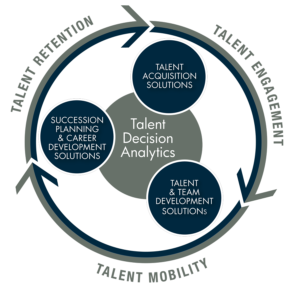
Harrison’s solutions are predictive, easy to customize, and reports are practical and prescriptive. In addition, Harrison offers Organizational Analytics to address both group and individual data, as well as facilitate risk and training needs analysis. Solutions include:
- Engagement with expectations, motivators, and fulfillment.
- A wide range of competencies and cultural values including EQ, Leadership, Collaboration, Sales, Remote Work and more.
- Proprietary Paradox Technology for deep insight of true strengths and areas of improvement.
With integrated predictive analytics as well as practical and personalized reports for selection and development, HR and leaders across the organization can improve:
- Agility and flexibility;
- Employee experience;
- Business/ talent performance and results;
- Competitive advantage.
Regardless of your organizational and HR priorities, Harrison Assessments predictive analytics enable you and your leaders to achieve business and talent goals more effectively and efficiently in 2024.
By Sheryl Dawson
CEO Dawson Consulting Group
 .
.

